Bedside hygiene for care teams.
Explore hair and body washing where a bathroom transfer is difficult or inappropriate.
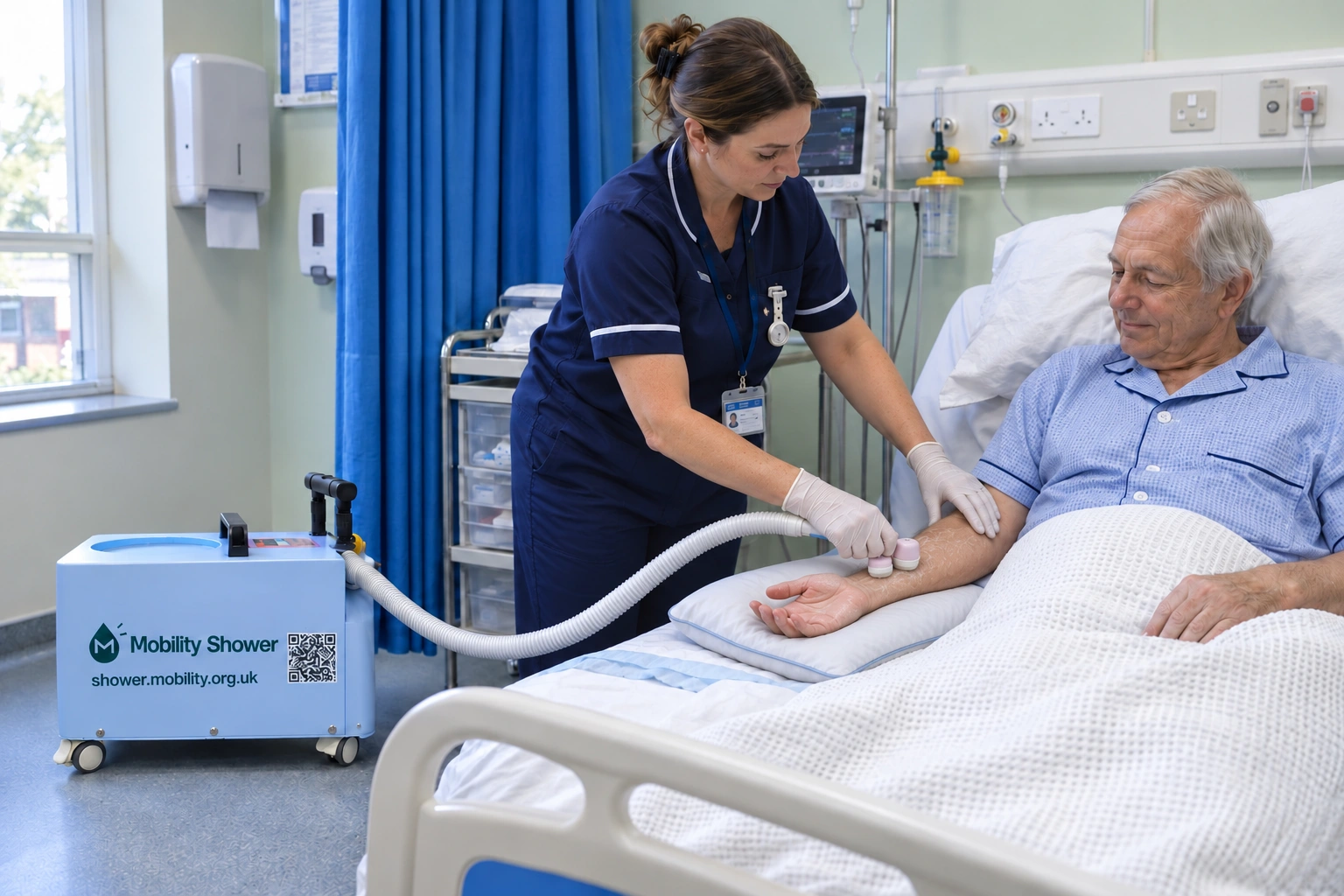
A practical option for ward evaluation
The manufacturer identifies hospital and post-operative care among its intended settings. Positioning, skin integrity, patient consent and clinical suitability remain decisions for the treating team.
Bring procurement and clinical teams together
Request technical documentation and discuss a demonstration. Local medical-device, electrical-safety and infection-prevention approval should be completed before clinical deployment.
Why a washing routine matters.
Skin care and pressure sores
Keeping skin clean and dry supports skin health as part of a pressure-sore prevention plan, alongside repositioning, pressure relief and regular checks.
Hygiene and infection prevention
Regular washing supports personal hygiene. Cleaning equipment between uses and following care guidance remain essential.
UTI prevention routines
NHS advice includes keeping the genital area clean and dry. Gentle daily hygiene belongs alongside hydration and appropriate continence care.
Dignity and wellbeing
Feeling clean and refreshed can make a difference to comfort, self-esteem and how someone feels about their day. Personal preferences and privacy come first.
General hygiene guidance. No device-specific reduction in pressure sores, infections or UTIs has been established from the evidence supplied.
Read the supporting guidance ↗Meet Mobility Shower.
£3,999 · Talk to our UK team about your home or care setting.
Availability and delivery confirmed personally.
Guidance for thoughtful care.
NHS resources, private hospital guidance and care home advice in one place.
Explore care guidance ↗Details for your care setting.
Water, temperature and care-team requirements.
Tank capacities, the operating details still to confirm and a checklist for professional buyers.
Read the technical guide